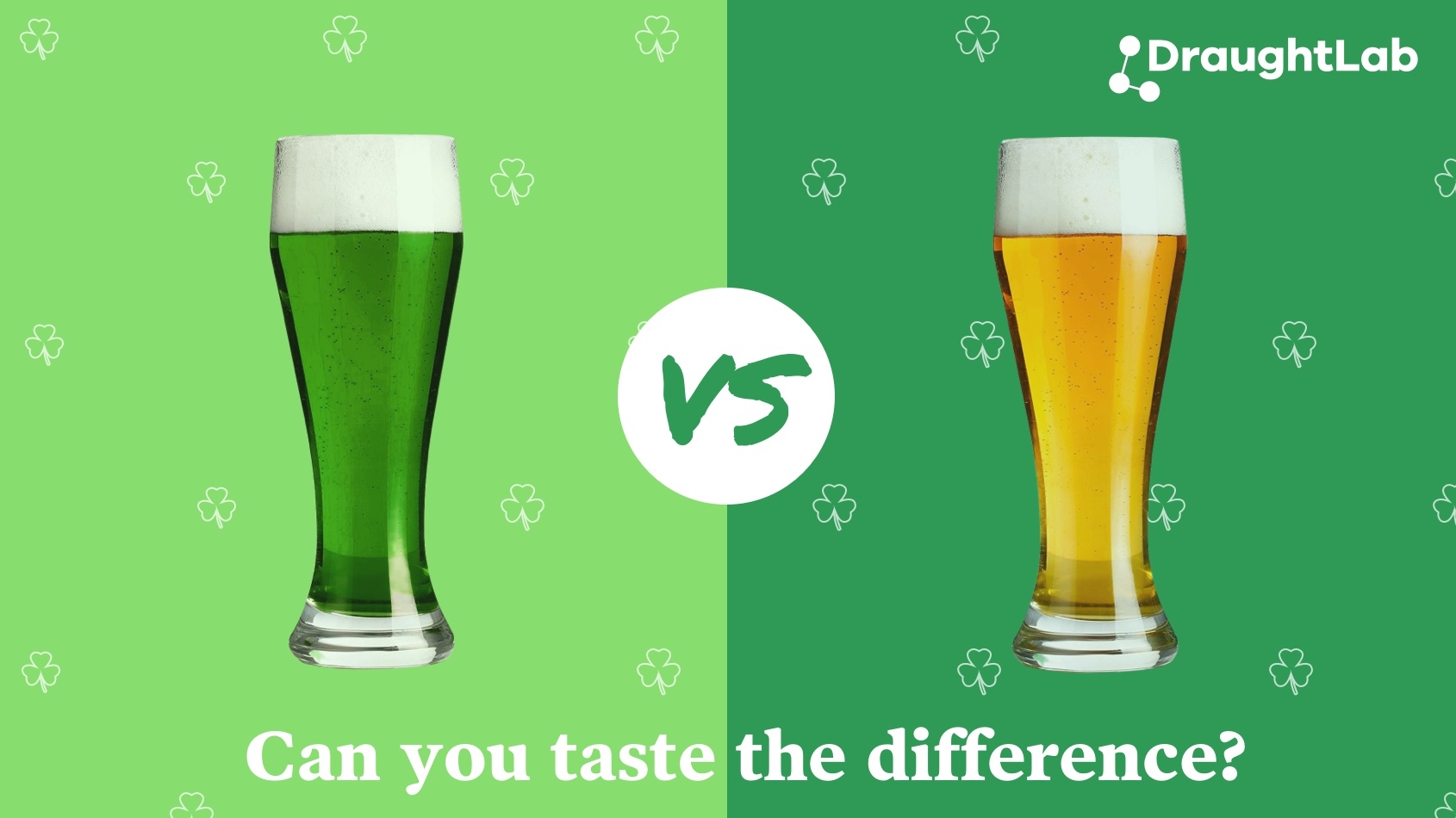
Around St. Patrick's Day, plenty of bars and breweries pour green beer as a festive option. Some people love it, some people avoid it, and many people assume it must taste different.
But if the color is hidden, can people actually taste the difference between green beer and regular beer? That question is a tidy example of where a sensory triangle test can help.
How the green beer test worked
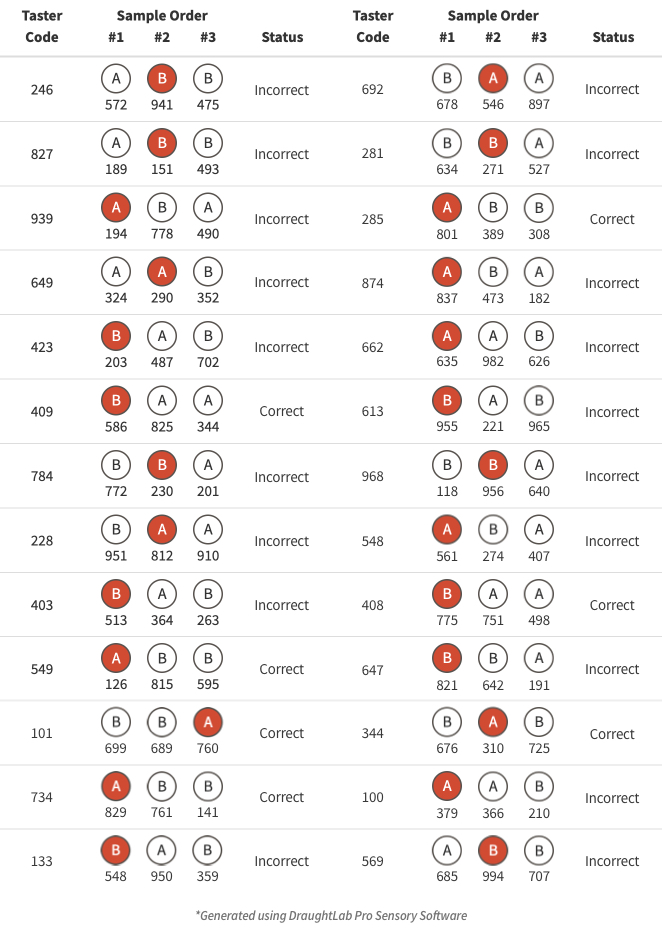
The study used a triangle test, a sensory method designed to determine whether people can detect a difference between two samples. Each participant receives three coded samples. Two are the same, and one is different. The task is to identify the odd sample.
For this test, the samples were prepared with a light lager. The green samples were made with two drops of water-based green food coloring. Samples were served in dark cups so tasters could not rely on color.
The order was randomized for each taster, and the final response set included 26 usable responses across three regions of the United States.
The triangle test results
The final results were straightforward:
- Total responses: 26
- Correct responses: 7
- Incorrect responses: 19
- P-value: 0.815
Only 27% of participants correctly identified the odd sample, which is below the one-in-three chance expectation for a triangle test. In practical terms, this result does not show evidence that tasters could detect a flavor difference between the green beer and regular beer in this setup.
Why color changes perception
The green color may be the strongest part of the experience, even if it does not change flavor. Food dyes are generally designed and tested to avoid adding flavor, and the concentration used in this test was likely too low to create a detectable sensory difference.
That does not mean color is unimportant. Visual cues shape expectations before tasting begins. If tasters can see a sample is green, they may expect it to taste different, even when the flavor itself has not changed in a measurable way.
What this study can and cannot say
Like any small study, the result has limits. It looked at one light lager, one water-based green food coloring, and one coloring level. Other beers, dyes, dosing levels, or serving conditions could produce different results.
Within this setup, though, the conclusion is simple: when the color cue was hidden, tasters did not show that they could reliably tell green beer from regular beer by taste alone.
What green beer teaches about sensory testing
The study is playful, but the lesson is useful. If a product difference is visual, package-related, or expectation-driven, you need a method that separates those cues from the sensory question you are trying to answer.
Dark cups, blind codes, randomized serving orders, and clear test instructions can help keep tasters focused on the intended sensory difference. For teams running product comparisons or quality checks, blind coding and well-matched methods make the results easier to trust.