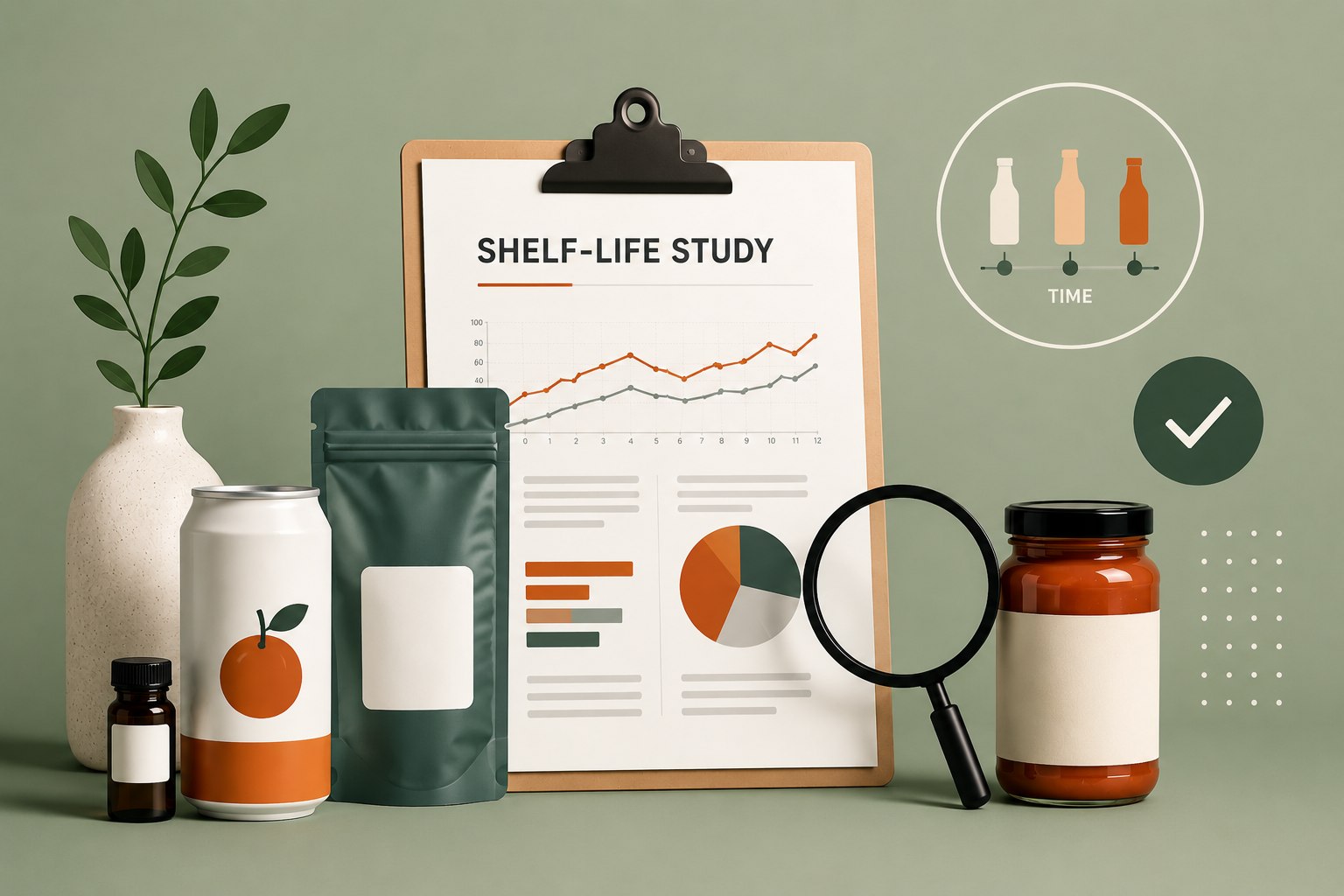
When most people hear the term shelf life, they think about food safety. They think about microbial stability, expiration dates, and regulatory requirements that determine whether a product is still safe to consume. But those are only one side of shelf life.
For sensory and product teams, shelf life is also about the consumer experience. A product may remain fully safe, but if the flavor fades, texture changes, or the overall experience declines, consumers may hesitate to make that all-important repeat purchase.
This is where quality shelf-life testing comes in.
What is quality shelf-life testing, and how is it different?
One thing worth mentioning is that there does not appear to be a universally accepted name for this type of work. We asked peers across several industries and heard everything from sensory shelf life to flavor shelf life to organoleptic shelf life.
Regardless of the terminology, the core question is simple: how does the product experience change over time, and when do those changes start to matter?
Nearly every product changes over time to some degree. A snack product may lose crispness. A beverage may lose brightness or freshness. A sauce may develop subtle texture changes during storage. These changes are often gradual, and in many cases they are expected.
The goal of quality shelf-life testing is not to eliminate all product change, but to understand:
- How much the product changes over time
- When those changes become noticeable
- Whether the product still aligns with the intended consumer experience
- How formulation, packaging, or storage conditions impact product quality
- Whether changes meaningfully affect consumer acceptance
This is where shelf-life work becomes different from many traditional quality measurements. Human perception becomes part of the evaluation process. Products do not simply pass or fail sensorially. Teams are often evaluating degrees of change and determining whether those changes are meaningful for the product, brand, or consumer.
The balance between accuracy and practicality
Shelf-life studies often run for weeks or months, which means sensory programs need to be sustainable over time.
More structured sensory approaches can provide highly detailed and repeatable information, but they also require training, coordination, and long-term consistency. Simpler approaches are often easier to maintain operationally but may provide less detailed insight.
Most organizations operate somewhere in the middle. The strongest shelf-life programs are usually not the most complicated. They are the ones that can be executed consistently while still generating useful information for the team.
This is where having a structured sensory approach becomes important. The challenge is often less about finding the perfect method and more about building an approach that fits the product, the operational environment, and the business question. For teams that need a repeatable way to collect and review tasting data, tasting software can help keep that process organized.
Quality shelf life supports better decisions
Quality shelf-life testing helps organizations better understand how products perform throughout storage and distribution. That understanding supports decisions around formulation, packaging, production consistency, storage conditions, and consumer experience.
Most importantly, it helps teams look beyond shelf life as purely a safety discussion.
For sensory and product teams, shelf life is also about maintaining a consistent product experience over time. Quality shelf-life testing provides a structured way to understand and manage that side of product performance.