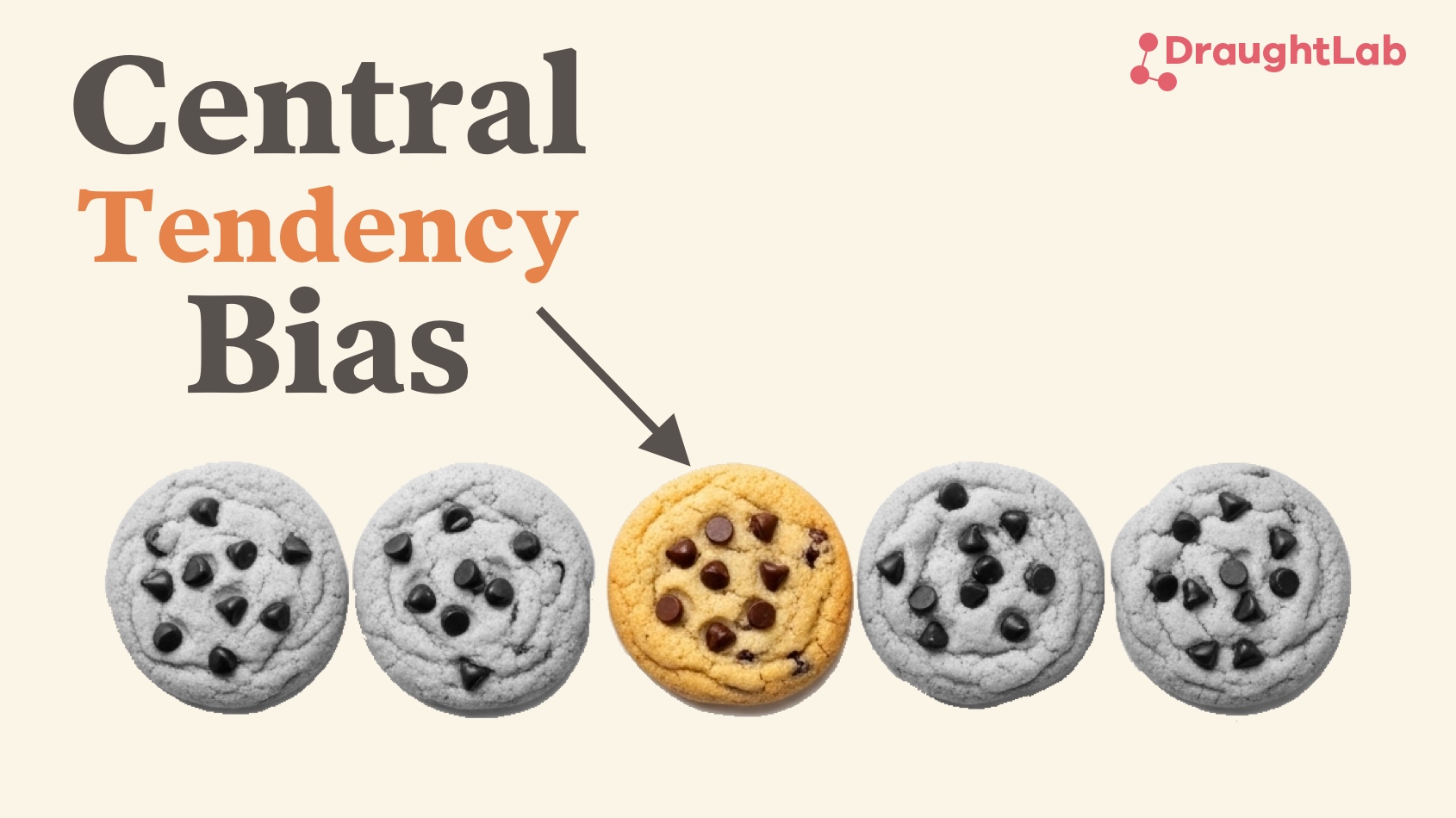
Running a sensory panel is all about collecting reliable, actionable data. But even with a trained panel and a well-designed test, hidden biases can creep into the results. One of the most common is central tendency bias.
What is central tendency bias?
Central tendency bias happens when people hesitate to use the extreme ends of a scale. Instead of confidently selecting the highest or lowest number, they often choose something closer to the middle. This usually is not intentional. It is human nature to hold back, especially when we are not sure what is coming next.
For example, if you ask someone to rate how much they like a product on a 10-point scale, they might give it an 8, even if they really enjoy it. They often hold back from giving a top score because they are saving those scores for something better that might show up later. The same thing happens at the lower end of the scale.
How central tendency bias impacts sensory data
When your panel consistently avoids using the full range of your scale, the data gets compressed. This makes it harder to identify meaningful differences, especially when you are trying to fine-tune flavor profiles or compare products side by side.
If you are conducting a test to see if one product is significantly sweeter, more bitter, or more aromatic than another, central tendency bias can mask those differences. The result is often flat, inconclusive data that does not give you the insights you need to make confident decisions.
How central tendency bias affects triangle tests
Central tendency bias can even creep into triangle tests, where participants are asked to pick the sample that is different from the other two. People often prefer to choose the middle sample when unsure, simply because it feels safer. This can skew results, especially if the middle position is chosen more often by chance alone.
That is why randomizing sample order is important. By changing the order for each participant, you can help reduce the impact of positional bias and make sure your results reflect actual differences between samples, not just a preference for the middle.
How it impacts scaling
Scaling tests, whether they are measuring liking or intensity, are where central tendency bias becomes more obvious. If panelists only use the middle portion of the scale, your data ends up compressed. The full range of responses you want, from not at all to extremely, gets narrowed into a small window, making it harder to see meaningful differences between products.
When the scale is not used properly, you lose sensitivity in your results, which means important product differences can go unnoticed.
How to reduce central tendency bias
Central tendency bias is common, but you can take steps to minimize its impact:
- Panel training: teach your panel how to use the full scale. Reference samples help panelists understand what the extremes represent.
- Clear anchors: use descriptive labels like extremely bitter or not at all bitter on your scales to guide participants.
- Encourage confidence: remind panelists that their personal perception is what matters. There are no right or wrong answers.
- Randomize sample presentation: especially in triangle tests, randomizing the order helps prevent positional bias.
- Use alternative test designs: tests like true-to-target and paired comparisons are forced choice and reduce the need to rely on numerical scales.
Build stronger sensory data
Reducing central tendency bias will not eliminate every challenge in sensory testing, but it will help you collect more reliable information. With stronger data, your team can make better decisions about product development, quality control, and innovation.
If your team is using scales, triangle tests, or other panel workflows, structured tasting software can help standardize sample presentation, capture responses consistently, and keep sensory data easier to interpret.